J. Lindeberg
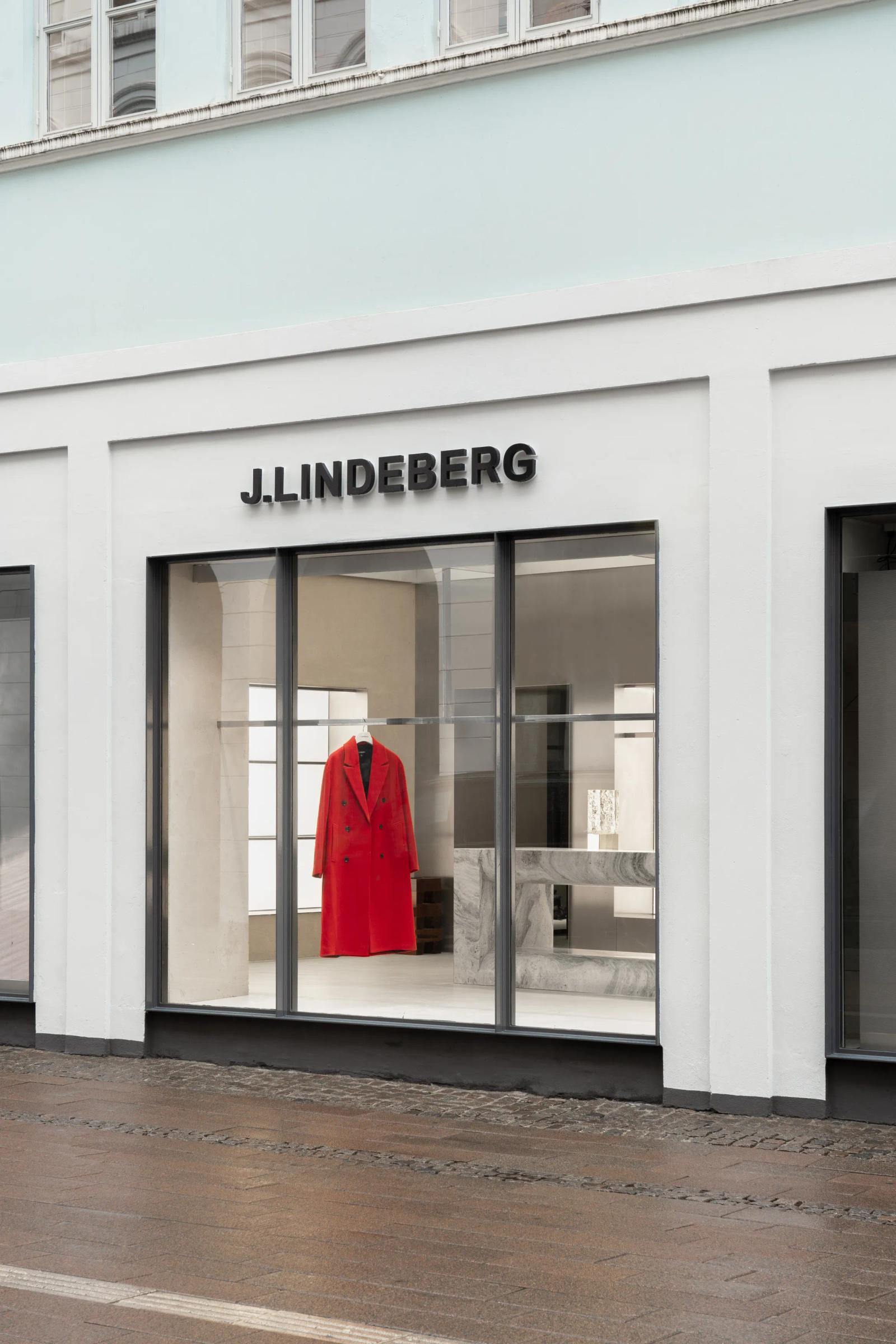
J.Lindeberg Copenhagen Flagship Store
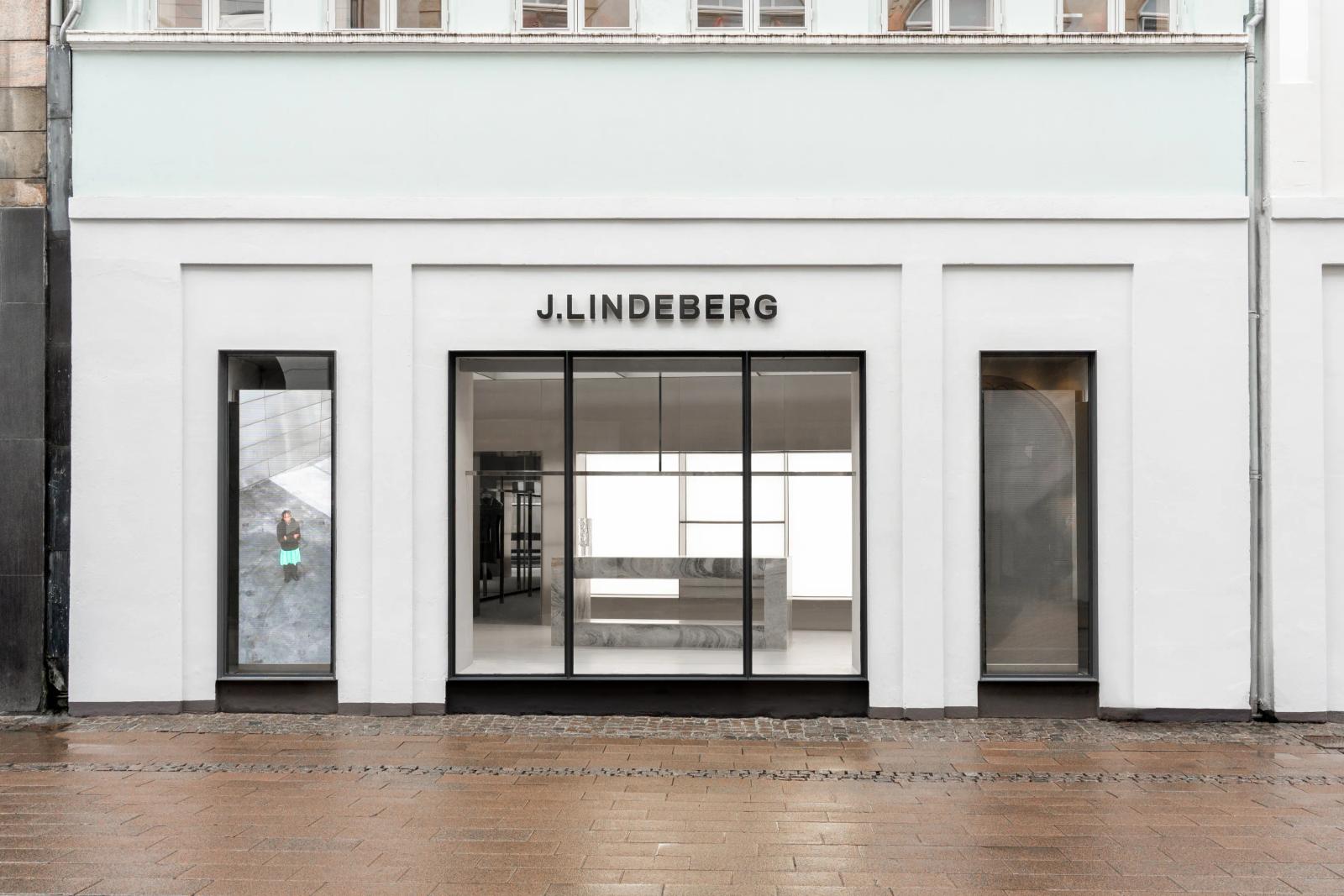
J.Lindeberg opens a new flagship store in the Danish capital. The inauguration of the retail space also signals the company’s new direction. The store occupies a spacious ground floor unit along Østergade, a bustling pedestrian road, which was previously home to a Burberry boutique.
Location: Østergade 21, Copenhagen
Opening: August 2023
Project Type: Flagship retail store immersive brand environment
▪Client
J.Lindeberg
▪Location
Østergade 21, Copenhagen
▪Design Surface
150 m²
▪Scope
Flagship Store
▪Opening
August 2023
▪Creative Director
Thibaut Allgayer
▪Project Manager
Tomai Nordgren
02
Challenge
J.Lindeberg sought to create a flagship store in Copenhagen that would reflect its hybrid identity fashion meets sport in a flagship retail format. The challenge was to transform a previously occupied luxury retail space (the former Burberry boutique) into an environment that is dynamic, engaging, and able to express brand heritage while looking to the future.Key issues to address:
▪Create a space that not only sells, but embodies the brand’s sport-fashion DNA.
▪Engage a sophisticated urban audience in Copenhagen with bold materials and immersive elements.
▪Introduce technology and flexible display systems to keep the space evolving rather than static.
▪Ensure the design aligns with both tailoring and active lifestyle segments of the brand.
03
Insight
Research into the brand’s dual identity (fashion + sport) and the Copenhagen market revealed several key insights:
▪Copenhagen shoppers respond to authenticity, craft materials, and intimate design language; a flagship must feel both premium and accessible.
▪Active lifestyle brands perform best when the environment feels as active as the product itself — motion, light, and texture communicate energy.
▪Flagship stores today must do more than display product; they must host brand experiences and cultural moments.
▪A fusion of digital and physical experiences elevates brand perception and increases dwell time, reinforcing both luxury and sport credentials.
04
Solution
The proposed design approach (for TOMAI’s conceptual delivery) mirrors the strategic moves expressed in the Copenhagen flagship:
▪Material & spatial language
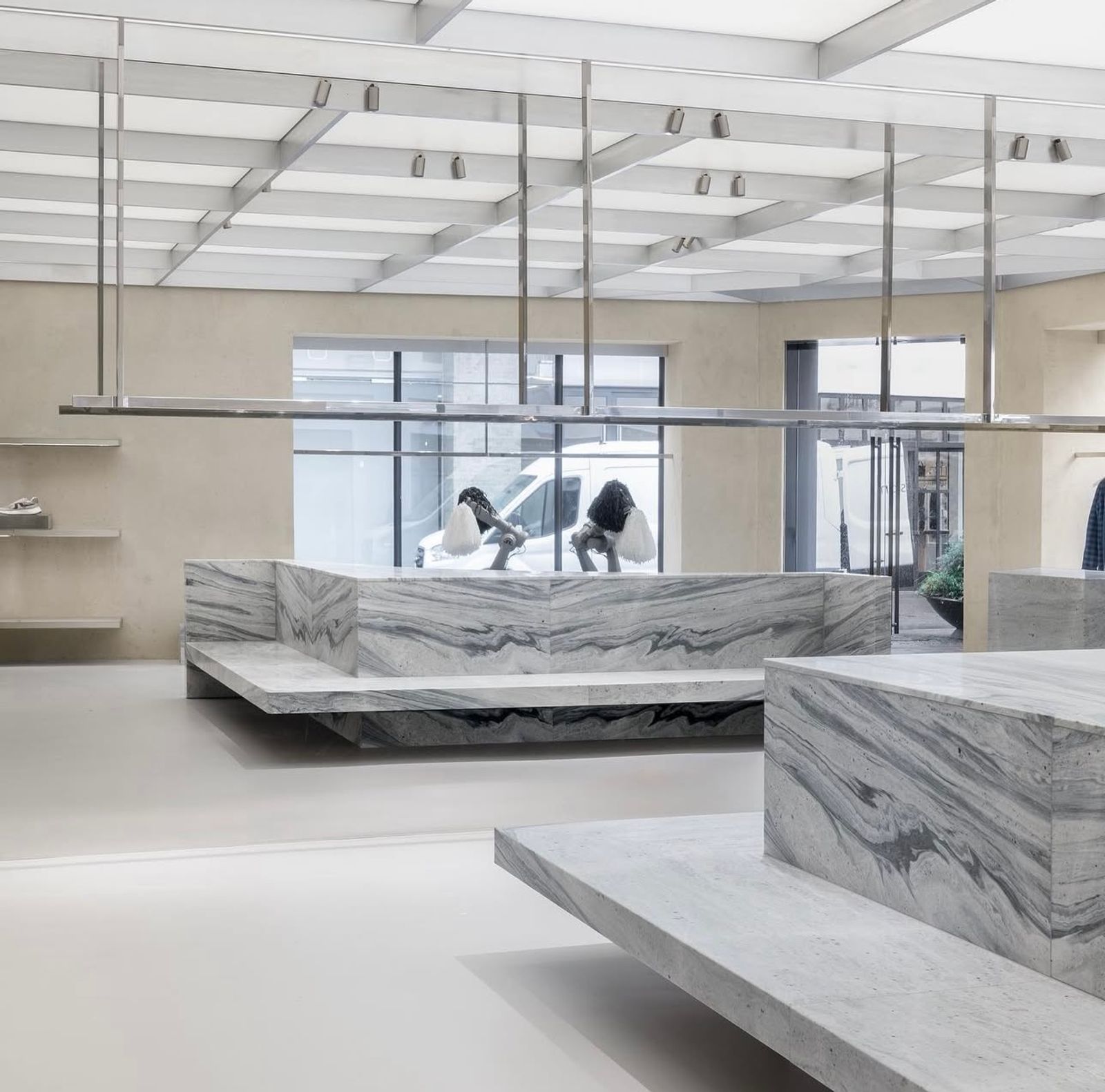
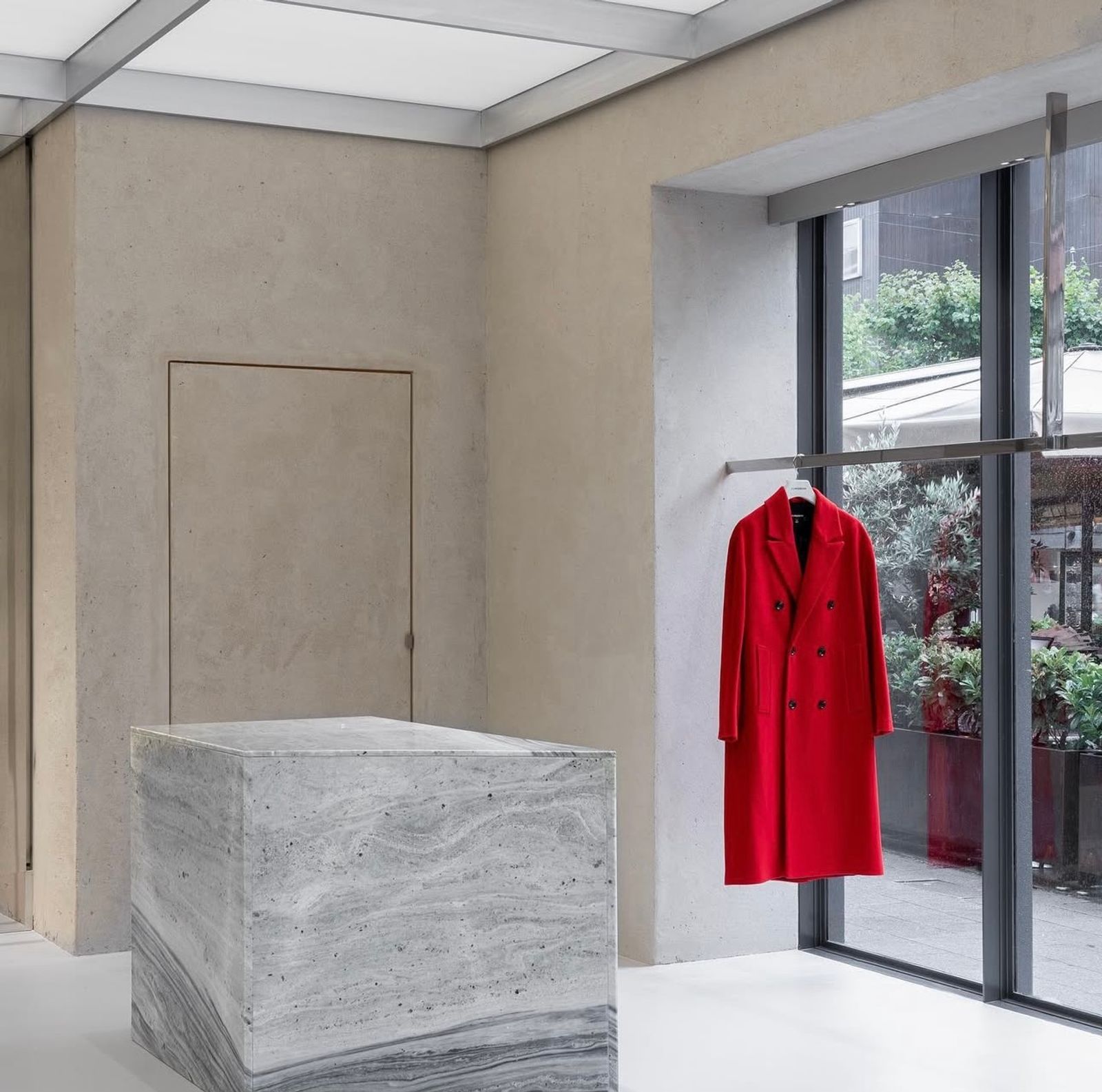
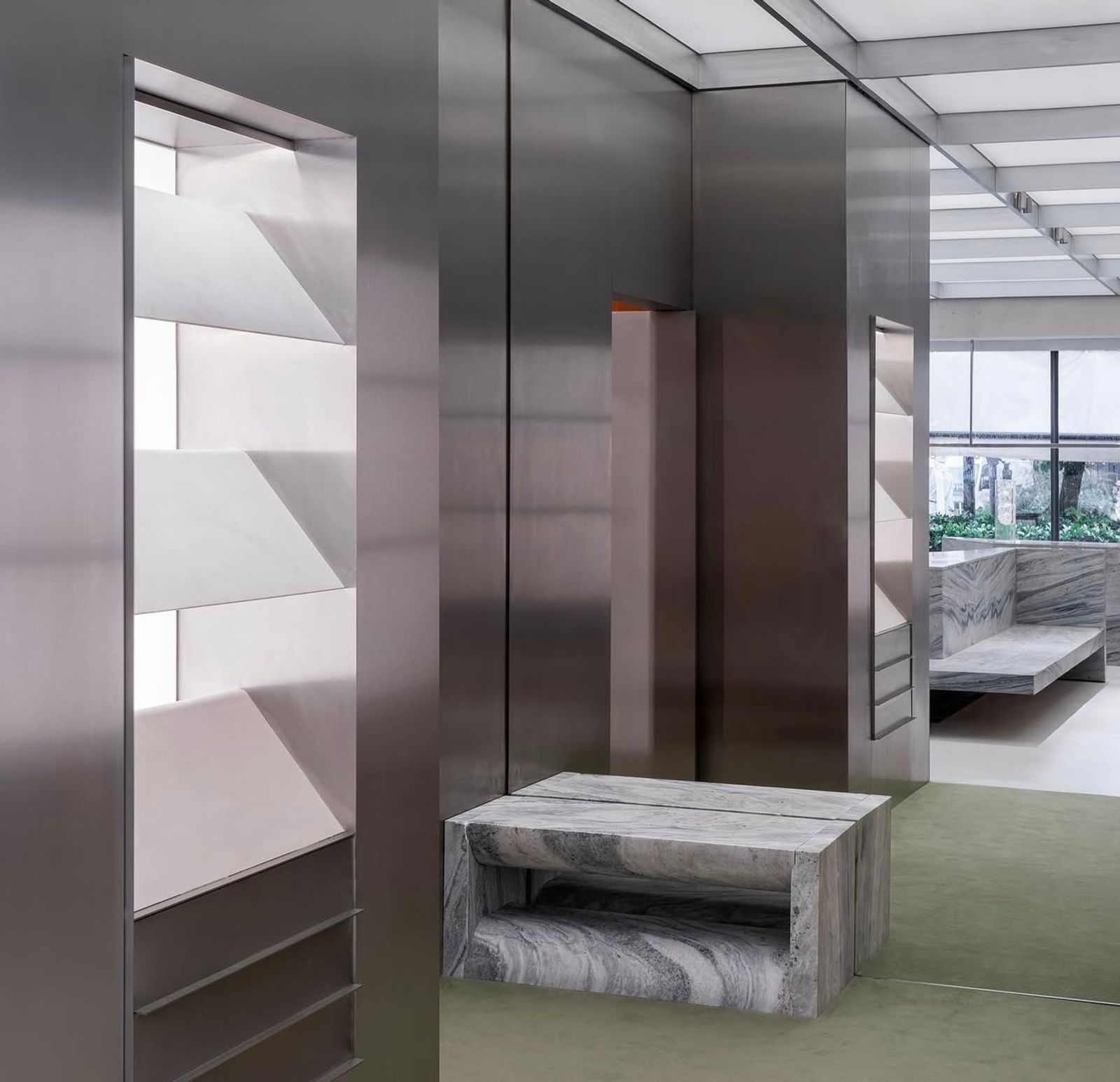
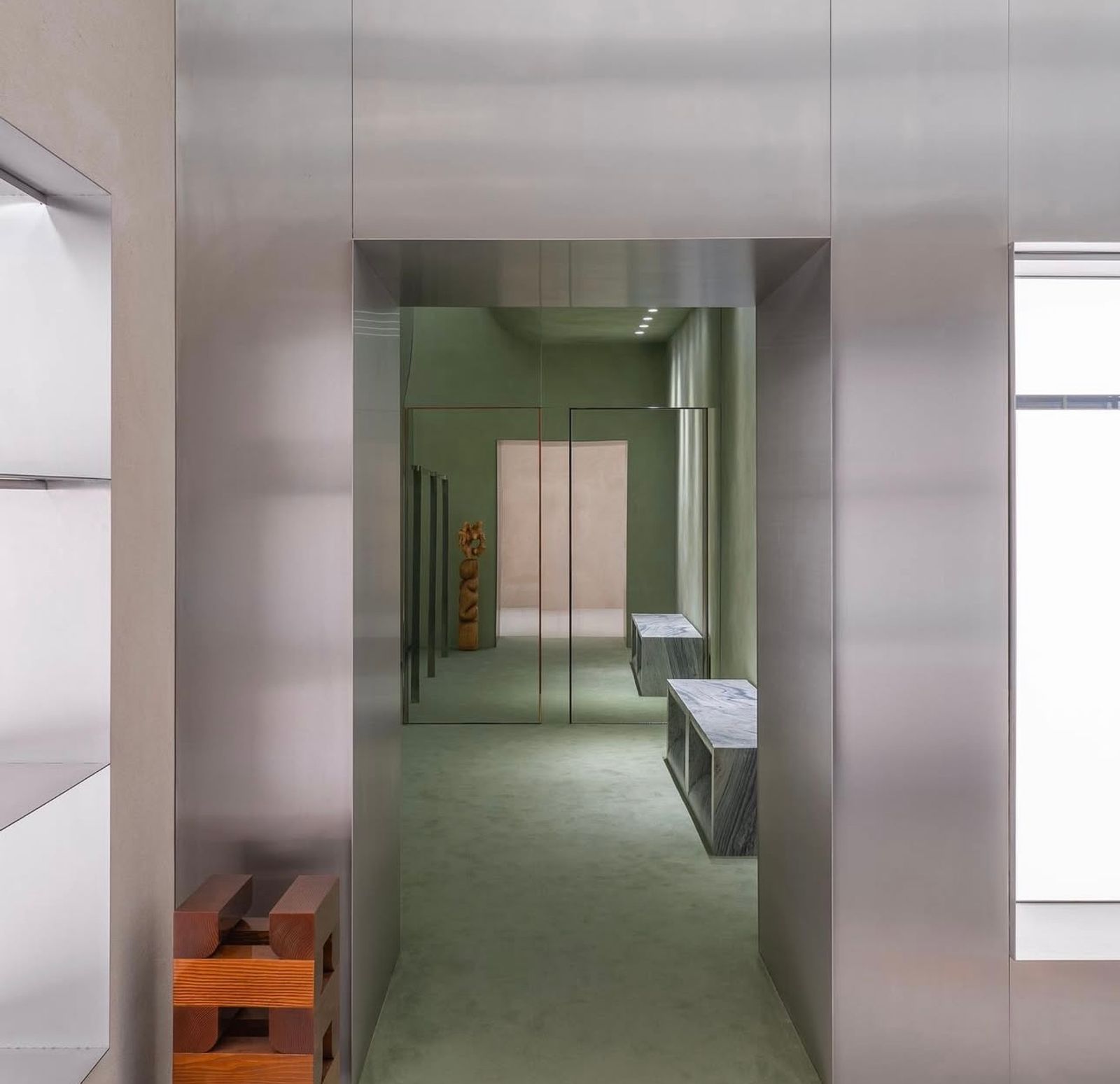
Contrast drives identity — soft vs. hard, curved vs. straight. Wood, steel, and mirrored surfaces articulate the duality of fashion + sport.
▪Immersive & evolving environments
A digital corner screen and a 300,000-colour lighting system create an atmosphere that adapts like the brand itself.
▪Brand identity through form and movement
The store is not a static product grid but a spatial journey — arrival, discovery, refined tailoring, active lifestyle — seamlessly connected.
▪Scalable system
Although a flagship, modular displays and scalable fixtures were designed to roll out globally without losing identity.
▪Technology integration
Screens, interactive lighting, and digital surfaces are embedded into the architecture, enhancing rather than distracting.
▪Execution & management
Detailed drawings, façade coordination, fabrication guidelines, MEP integration and a toolkit ensured the concept worked as beautifully in practice as it did on paper.
05
Outcome
▪The flagship became a destination in central Copenhagen, signaling J.Lindeberg’s elevated brand stance.
▪Visitors spent more time in the space, increasing engagement and reinforcing lifestyle positioning.
▪Flexible systems enabled effortless seasonal activations and pop-ups without full re-fit investment.
▪A scalable design language was established as a template for future global expansion.
06
Why It Matters
This case illustrates how to:
▪Merge brand heritage with future-focused retail design.
▪Use immersive spatial storytelling to elevate retail beyond commerce.
▪Balance high-impact aesthetics with operational precision.
▪Merge brand heritage with future-focused retail design.
▪Use immersive spatial storytelling to elevate retail beyond commerce.
▪Balance high-impact aesthetics with operational precision.
“Flagship stores today must do more than display product — they must host brand experiences and cultural moments.”
Constraints
Primary site constraint: Østergade 21, Copenhagen.
Available footprint
Ground Floor Unit.
Delivery deadline
Opening in August 2023.
Program Breakdown
Total designed area: Ground Floor Unit.
Primary program
Flagship Store.
Space planning priorities
Customer flow, sightline control, display density, and operational back-of-house functionality.
Materials and Fabrication
Material strategy: Durable touch-point surfaces, low-maintenance finishes, and clear junction detailing.
Fabrication logic
Repeatable modules and precise interfaces between bespoke joinery and standard fixture systems to reduce installation risk.
Technical Performance
Area reference: Tracked against built footprint for comparability.
Key operational indicators
Dwell time by zone, conversion at high-attention fixtures, and maintenance frequency at high-contact elements.
Lighting and display layouts
Calibrated to preserve product legibility across varying occupancy levels.
Lessons Learned
This case illustrates how to:
Merge brand heritage with future-focused retail design.
Use immersive spatial storytelling
Elevate retail beyond commerce.
Balance high-impact aesthetics with operational precision.
Related projects
Intro