Robot Arms
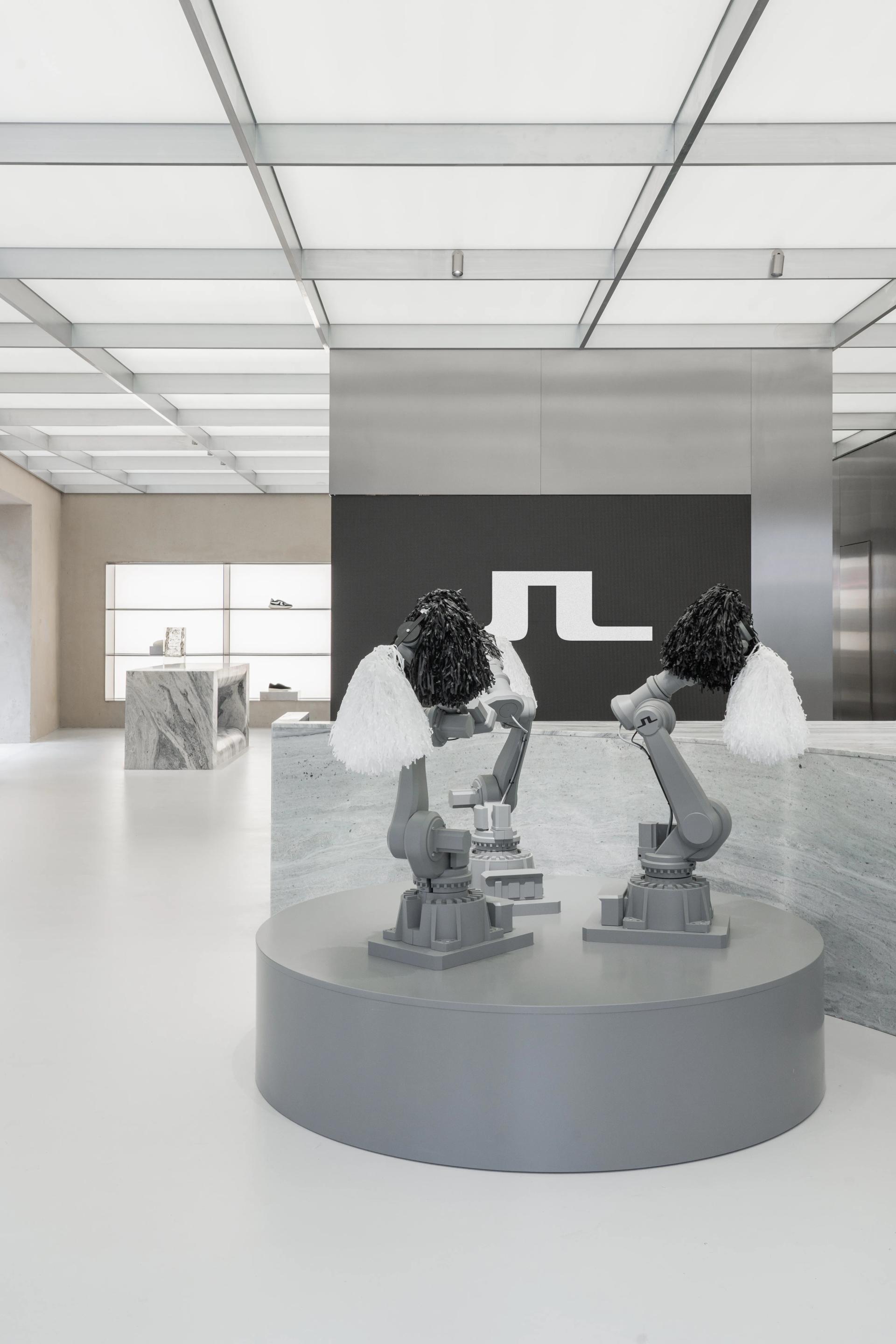
In Copenhagen, the installation pairs fashion display with robotic choreography. Mechanical arms move through repeatable paths that are precise enough for reliability, but varied enough to keep each viewing cycle distinct. What you register first is control, then the subtle irregularities that make the movement feel authored rather than automated.
The staging avoids visual clutter. Dark backgrounds, directional light, and careful spacing between devices allow the garment and movement arcs to read clearly from multiple angles. Timing is calibrated so transitions never collide, which keeps the sequence calm even when several machines operate at once.
Up close, the project is about tolerance and calibration. Mount points, cable routing, and service access are resolved with the same discipline as the visible composition. That technical clarity lets the installation perform as both a working system and a public-facing design piece.
▪Location
Copenagen
▪Sector
experiential, retail
▪Services
exhibitions, brand-activation
▪Type
Robot Arms
▪Creative Director
Ray Atelier
▪Palette
Base
#393939
Secondary
#A1A19C
Highlight
#DEDDDC
Tone 4
#BAB9B6
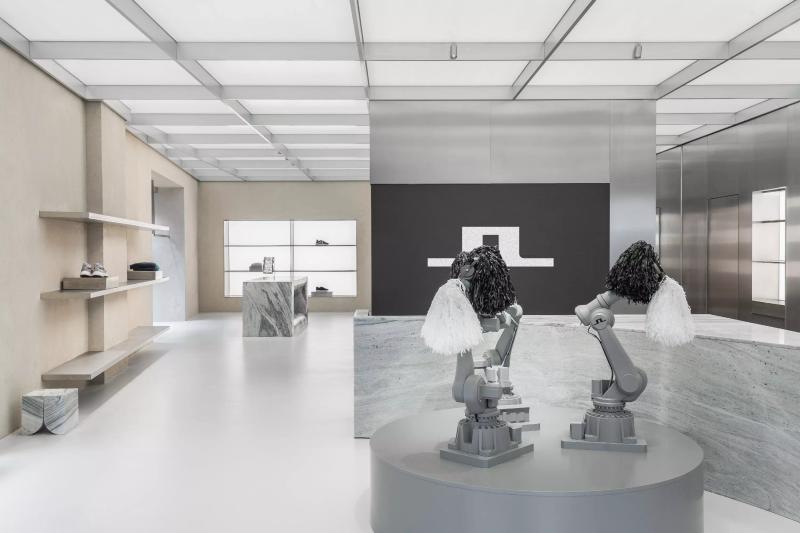
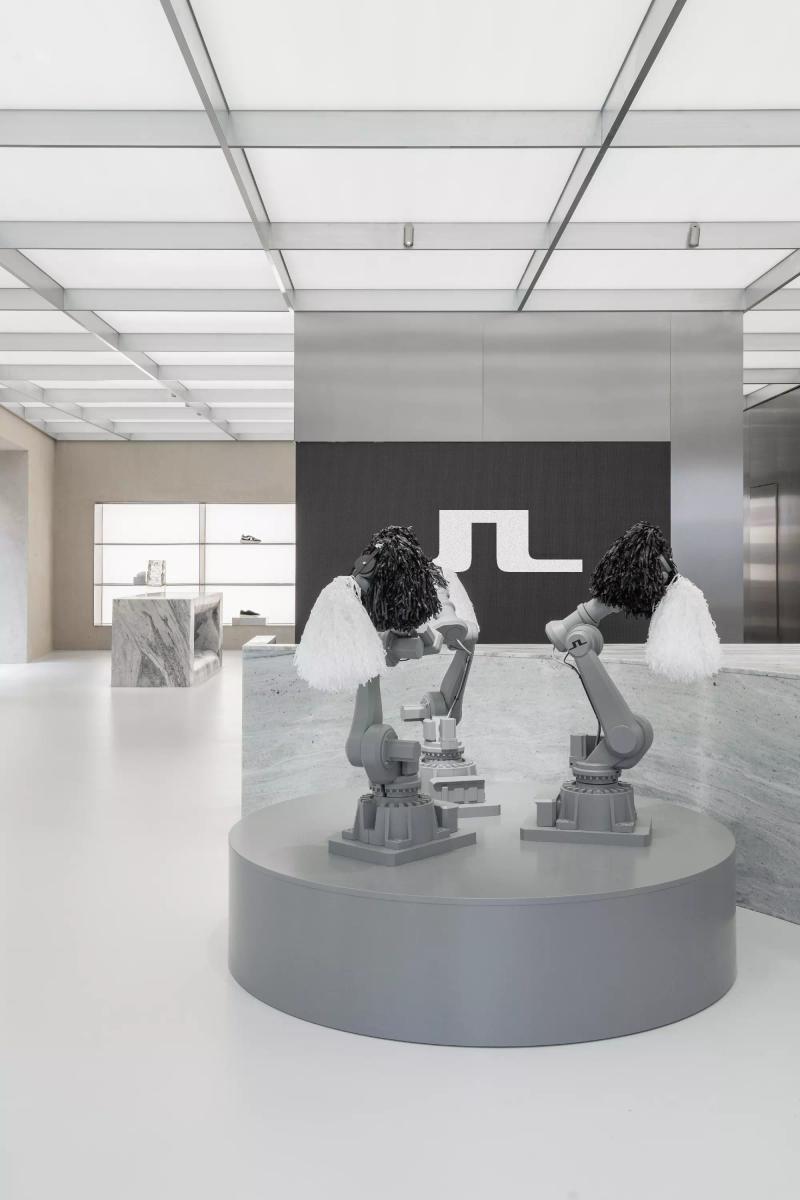
Robot Arms reads as compact but deliberate. In Copenagen , the plan keeps circulation clear so the room can stay quiet even when it is active. Materials do most of the speaking: wide-plank oak, brushed stainless steel, and matte painted walls that keep reflections controlled. The project keeps the brief grounded in use: At J.Lindeberg Copenhagen, precision meets performance through the hands of machines. Robotic arms sculpt style like ath. The result is observational and precise. Nothing asks for attention, but everything is legible once you slow down.
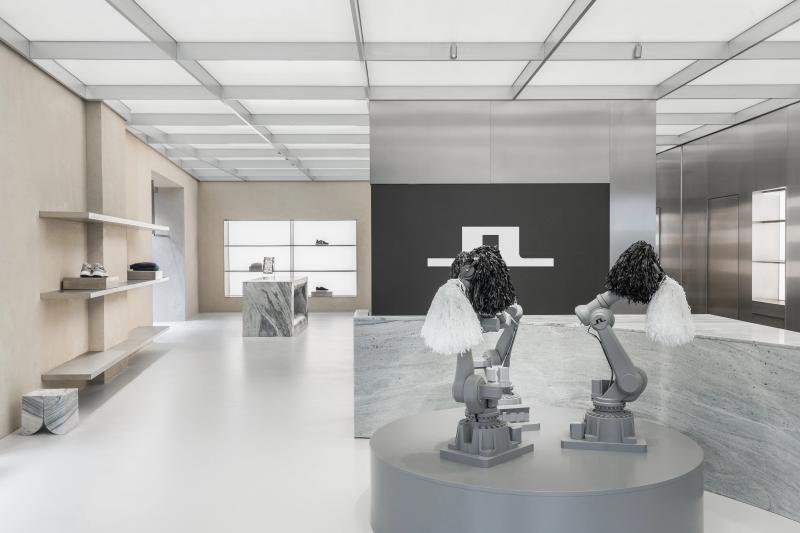
The sequence feels edited rather than sparse. You move through Robot Arms without friction, and each surface carries enough weight to hold the eye. Junctions are clean and repeatable, which gives the small shifts in material a stronger effect. The project keeps the brief grounded in use: At J.Lindeberg Copenhagen, precision meets performance through the hands of machines. Robotic arms sculpt style like ath. What stays with you is restraint. The project avoids gestures and leans on proportion, texture, and sequence instead.
At Robot Arms , the layout works like a measured script. The room gives you one clear line of movement, then lets details accumulate at the edges. Junctions are clean and repeatable, which gives the small shifts in material a stronger effect. The project keeps the brief grounded in use: At J.Lindeberg Copenhagen, precision meets performance through the hands of machines. Robotic arms sculpt style like ath. It lands through control, not spectacle. Proportion and material contrast carry the atmosphere from one frame to the next.
▪Spatial Priorities
Circulation clarity
Movement routes are kept legible so browsing, service, and dwell zones do not compete.
Sightline control
Displays and focal points are arranged to maintain visibility while preserving rhythm through the space.
Program flexibility
Spatial components are planned for quick resets, changing content, or temporary activation needs.
▪Material Notes
Key Materials
Material specification should be documented from drawing sets and site photography before final publishing.
Color Reference
Image-derived palette baseline: Base #393939, Secondary #A1A19C, Highlight #DEDDDC, Tone 4 #BAB9B6. Use as a visual reference and validate against material samples on site.
Finish Notes
Keep finish notes practical: identify high-touch surfaces, wear-prone edges, and cleaning-sensitive materials.
▪Delivery Scope
Concept Development
Spatial concept, layout direction, and design intent framing.
Material & Finish Specification
Selection and documentation of key finishes, fixtures, and surfaces.
Art Direction
Visual consistency across touchpoints, detailing, and spatial expression.
Merchandising / Display Logic
Display zones and fixture priorities coordinated with circulation and visibility.
Related projects